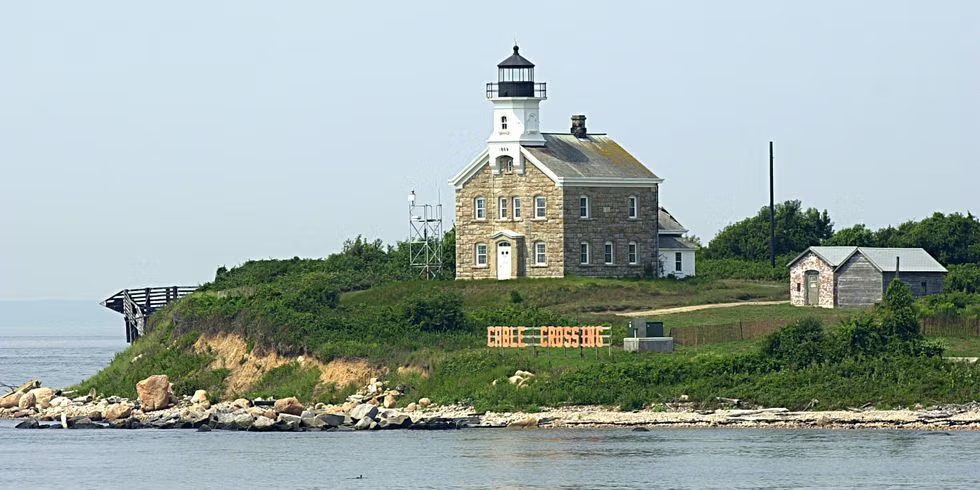
When you hear the name plum island southold ny 11957, it sparks curiosity. Located just off the northeastern tip of Long Island, this island has a long and fascinating story. Known for its scientific research, untouched natural beauty, and air of mystery, Plum Island continues to capture attention far beyond Southold, New York.
This article explores the island’s location, history, ecological significance, and its uncertain future. Whether you’re a traveler, a local resident, or someone intrigued by unique places in the United States, you’ll find plenty to discover about Plum Island.
Where is Plum Island Southold NY 11957?
Plum Island sits about a mile and a half off the coast of Orient Point, which is part of Southold in Suffolk County, New York. The island covers roughly 840 acres. While close to the North Fork of Long Island, it feels worlds away due to its restricted access.
Because it falls within the zip code 11957, which belongs to Southold, Plum Island is technically tied to the community. However, unlike the rest of Southold, you can’t freely visit the island. Federal ownership and limited entry rules have made it one of the most talked-about places in the region.
A Brief History of Plum Island
The story of plum island southold ny 11957 stretches back centuries. Native American tribes once used it for fishing and hunting. Later, during colonial times, the island’s strategic location attracted attention from settlers and military planners alike.
In the late 19th century, the U.S. Army constructed Fort Terry, a coastal defense site on Plum Island. The fort served various purposes through the Spanish-American War and both World Wars. By the mid-20th century, however, its role shifted from defense to science.
The most well-known chapter in Plum Island’s history came with the Plum Island Animal Disease Center (PIADC), established in 1954. The facility’s mission: to study foreign animal diseases, such as foot-and-mouth disease, that could threaten U.S. livestock.
Because of this work, the island remained closed to the general public, sparking endless speculation, rumors, and conspiracy theories.
Why Plum Island Remains a Mystery
Few places stir as much curiosity as plum island southold ny 11957. Part of the intrigue comes from its restricted access. Since it is government-owned and used for research, only authorized personnel may enter. This secrecy fueled many theories, ranging from hidden experiments to bizarre legends.
While most of these stories are exaggerated or fictional, they highlight just how much mystery surrounds the island. The truth is simpler: Plum Island has played a critical role in protecting American agriculture.
The Natural Side of Plum Island
Beyond its history, plum island southold ny 11957 is home to an extraordinary natural environment. Decades of limited public access allowed wildlife to thrive without disturbance. The island is a sanctuary for migratory birds, rare plants, and coastal ecosystems.
Some highlights include:
Bird habitat: Plum Island supports over 200 bird species, including ospreys, piping plovers, and terns.
Marine life: The surrounding waters shelter seals, fish, and shellfish.
Undisturbed landscapes: From rocky shorelines to grasslands, the island remains a glimpse of Long Island’s past before development spread across the region.
Environmental groups often point to Plum Island as a once-in-a-lifetime conservation opportunity. Preserving it could ensure that both its history and ecosystems remain intact for future generations.
The Future of Plum Island
The future of plum island southold ny 11957 has been uncertain for years. At one point, the federal government considered selling it to private developers once the research center relocates to Kansas. This idea sparked strong opposition from local leaders, environmental advocates, and residents of Southold.
They argued that Plum Island’s ecological value, historical significance, and location make it too important to be turned into luxury housing or commercial property. Instead, conservation groups envision a national park or wildlife preserve.
As of now, discussions about the island’s long-term future continue. The debate highlights a broader question: how should we balance preservation, history, and development when it comes to such a unique place?
Why Plum Island Matters to Southold
The connection between plum island southold ny 11957 and the Southold community is strong. While the island itself remains off-limits, its presence shapes local identity and culture. Residents see it as part of their heritage, whether through memories of family members who worked at Fort Terry or the animal disease center, or through pride in Southold’s place on the national map.
Economically, the research center has provided jobs and government funding for decades. Environmentally, the island serves as a natural buffer, protecting nearby waters and habitats. Culturally, Plum Island adds depth to Southold’s reputation as a town rich in history, mystery, and natural beauty.
Visiting Plum Island: What You Should Know
Currently, the average visitor cannot access plum island southold ny 11957. The government restricts public tours due to the island’s role in research. However, you can still experience Plum Island in other ways:
Boat tours: Some local companies offer cruises that circle the island, giving passengers stunning views from the water.
Birdwatching: Bring binoculars to Orient Point or nearby beaches to see migratory birds flying toward Plum Island.
Learning opportunities: Museums and historical societies in Southold often highlight Plum Island’s history and significance.
These experiences allow you to appreciate the island’s beauty and story without setting foot on it.
Final Thoughts
The story of plum island southold ny 11957 is one of contrasts. It is both a site of cutting-edge science and a haven for nature. It is part of Southold, yet mostly off-limits. It is a place with a proud history, but also an uncertain future.
For now, Plum Island remains a mystery that fascinates locals and outsiders alike. Whether preserved as a wildlife sanctuary or adapted for new purposes, its importance to Southold and Long Island cannot be denied.